16 Results for : eleanore
-

Der gekaufte Tod
»Stephen Mack Jones haucht Detroit neues Leben ein.« The Boston Globe Mexicantown, Detroit. August Snow kehrt mit zwölf Millionen Dollar Schadenersatz zurück in das Viertel seiner Kindheit. Genug Geld für den Ex-Polizisten, um seinen alten Humor wiederzufinden und ein neues Leben zu beginnen. Doch er hat die Rechnung ohne seine Feinde gemacht: Kurz nach seiner Rückkehr wird eine der mächtigsten Unternehmerinnen der Stadt tot aufgefunden. Snow setzt sich auf die Fährte des Mörders - und gerät in einen gefährlichen Strudel, der ihn in Detroits dunkelste Winkel hinabzieht.Die zwölf Millionen stammen aus einem Prozess gegen den korrupten Polizeiapparat der Stadt. Mit dem Geld will Snow, Sohn eines afroamerikanischen Polizisten und einer mexikanisch-amerikanischen Malerin, den Stadtteil seiner Kindheit wieder aufbauen. Da bittet ihn die Großunternehmerin Eleanore Padget, verdächtige Vorkommnisse in ihrer Bank aufzuklären. Snow lehnt ab. Kurz darauf wird die Frau tot aufgefunden. Selbstmord, lautet die Diagnose der Polizei. Snow hat Zweifel und begibt sich auf die Suche nach dem Mörder. Ein packender Thriller inmitten der rauen, multikulturellen Realität Detroits.- Shop: buecher
- Price: 17.50 EUR excl. shipping
-

Cannes, Cap d'Antibes, Nice, & Menton: The French Riviera: Travel Adventures , Hörbuch, Digital, ungekürzt, 434min
In 1834, the British Lord Chancellor, Lord Henry Brougham, was on his way to Nice, still part of Italy and already a popular winter resort with English aristocrats. Because of a cholera epidemic in Provence, the governor of Nice had closed the border so Brougham and his daughter Eleanore were turned back. On their way to Grasse, they stopped for the night at an inn on what is today the Rue du Port in Cannes. Brougham was so taken with the little village of Canoïs that he stayed on, ultimately commissioning a splendid villa named after his daughter. Two years later, the crême de la crême of London high society, fleeing Britain's dull winter climate, followed Brougham to Cannes. By 1838, the port was under construction and the spectacular seafront, La Croisette, was underway. Ten years later, palace hotels were going up, a poor fishing village had been transformed into a fashionable winter resort with vast mansions, gardens bursting with exotic blooms, grand avenues and promenades. Cannes had become the coast's leading resort. Then there is the Cannes Film Festival. Every May, film stars and starlets, filmmakers, film buyers, film investors, producers, publicists and autograph seekers take over the whole town. If you can elbow your way into Cannes during the festival season, you'll find them parading along La Croisette, partying on the yachts that fill the harbor, wheeling and dealing in hotel rooms, restaurants and bars. And then there is Antibes. I discovered that I loved Antibes on my first trip to the South of France. It has remained my favorite town on the Riviera ever since. Every house seems bursting with flowers. Geraniums, oleanders, bougainvilla, grape vines, palms and yucca plants tumble out of pots and cover golden stone walls. American millionaires discovered Antibes-Juan les Pins at the beginning of the 20th century. They built enormous mansions on the Cap d'Antibes or took over ones built earlier. ungekürzt. Language: English. Narrator: Kate Fisher. Audio sample: https://samples.audible.de/bk/acx0/031112/bk_acx0_031112_sample.mp3. Digital audiobook in aax.- Shop: Audible
- Price: 9.95 EUR excl. shipping
-
-

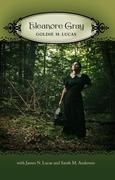
Eleanore of Aquitaine
Eleanore of Aquitaine: ab 1.93 €- Shop: ebook.de
- Price: 1.93 EUR excl. shipping
-
-
Sonidos de Nueva Espaa
Piano music by Mexican composers is not often heard outside Mexico. While the composers of Mexico have not focused on the piano like those of many other countries of Latin America, and throughout the world, there is much Mexican piano music that is well worth listening to and getting to know intimately. The works that appear in this recording were selected based on my personal taste, and include some of my favorite pieces by my favorite Mexican composers for the piano. All of these works were published by the same firm, Ediciones Mexicanas de Música (Edimex), whose co-founder and long time director was Rodolfo Halffter. Halffter (1900-1987) emigrated from Spain to Mexico following the Spanish Civil War, became a Mexican citizen, and lived the rest of his long life in Mexico. He threw himself into the musical life of the country, creating and editing a music journal, teaching at the national conservatory, conducting orchestras, and writing a great deal of excellent music. The two pieces I have included by Halffter show some of his range as a composer. The first, Homenaje a Antonio Machado, written in 1944, could be called neo-classical or neo-Baroque in style. It was written in honor of one of Spain's greatest 20th century poets, with fragments of his poetry attached to each of the movements. A short poem is appended to the work as a whole, one with particular poignancy for a composer, or for any artist. It advises the reader to wait for the tide to come, just as a ship would. But if the tide doesn't arrive, continue to wait, and in the end, well, it doesn't really matter. The second selection by Halffter, Secuencia, is a late work, from 1977, and is quite different in style. It is written based on Halffter's own adaptation of twelve-tone technique. Twelve-tone rows appear in each movement, but his selection of intervals, and his use of repetition of fragments, gives this music a far different sound from the music of Schoenberg, Webern and most of their followers. It is playful, colorful, and quite approachable. The titles reveal Halffter's sense of irony: we have the prelude, which should come before the main piece, we have the interlude, which might come between movements, and we close with the postlude. Where is the actual piece? Both Homenaje and Secuencia exhibit Halffter's characteristic focus on articulation and counterpoint, and his use of decorative figures. Another composer, Federico Ibarra Groth (1946 -), is also represented by two works. Ibarra is one of those rare composers who has developed his own very distinctly individual voice at the piano. He has chosen to focus on writing sonatas for piano, a fairly unusual form for the late 20th and early 21st century. Six have been completed as of this date (the sixth was published in 2002), and they comprise a remarkable body of work. They are tied together by underlying compositional elements, but in a way that has little to do with the scholastic pedantry of many modern composers. Ibarra is, himself, a pianist and writes in a very pianistic way. He has explored many of the sonic possibilities of the instrument, and has created techniques that can be used to coax fresh and compelling sounds, from the delicate and ethereal to the wildly passionate. He weaves a magic spell from patterns that sometimes seem so immediate and obvious, one wonders why nobody else ever came up with them. I have chosen to record Ibarra's second and third sonatas for this CD. The second, written in 1982, is a one movement sectional work. It opens with a flourish that is repeated twice later in the piece as a punctuation between sections, and appears as an echo at the very end. The three sections are quite distinct from one another, ranging in character from the virtuosic and bombastic to the most delicate filigree. His third sonata, from 1988, has a title, "Madre Juana," which refers to an opera by Ibarra of that name. The second and third movements contain material taken from the opera, while the first movement is entirely original and is written to evoke the opera's mood. The three movements are connected thematically in many ways, sometimes obviously, other times more subtly. Chromatic melodies and accompaniment patterns are a prominent feature, and, like the second sonata, the range of expression is dramatic. Blas Galindo Dimas (1910-1993) went to Mexico City from his native Jalisco at the age of twenty, planning to study law. An acquaintance persuaded him to attend a concert in which some music by Revueltas was performed, and he changed his mind, enrolling in the National Conservatory instead, where he studied composition, and later became professor and director. Galindo's Siete Piezas (1952) explores a range of harmonic styles, from the severe diatonicism of Chavez to the piquancy of bitonality and quartal harmonies, always with a transparent clarity of line. Of particular note are the fourth piece, a two part invention on a theme that uses all twelve chromatic tones, and the seventh, a perpetuum mobile in which the two hands are often playing the same precise pattern a fourth or a minor third or some other interval apart. José Pablo Moncayo (1912-1958) worked his way through the conservatory as a jazz pianist, and that experience seems to have influenced his style, with it's shifting accents, constant development and alteration of motives, and general improvisatory feel. He is best known outside Mexico for his Huapango for orchestra, a piece that has entered the standard repertory of orchestras around the world. Muros Verdes (1951), while not well known outside Mexico, is a standard piece of literature for young Mexican pianists. Eduardo Hernández Moncada (1899-1995) was José Pablo Moncayo's piano teacher. He spent much of his working life as a performer, conductor and teacher, and only began composing on a really productive basis fairly late in his career. Costeña (1962) is in many ways similar to Muros Verdes, with it's constant development of themes and rhythmic vitality. Underlying it is a "quarrel" between 3/4 and 6/8 time, against which additional off beat accents provide a complex counterpoint. Fred Sturm is a pianist based in Los Ranchos New Mexico, who specializes in the music of Latin America, with a particular emphasis on the work of Heitor Villa-Lobos. His previous recordings include American Rags, Brazilian Tangos, and Afrocuban Dances, Piano Music of Ginastera and Villa-Lobos, Spanish Dances, and Brazilian Soul. This recording is dedicated to my teachers, Eleanore Vail and Morton Schoenfeld. Recorded and mastered by Manny Rettinger, UBIK Sound LLC. Recorded in Keller Hall, University of New Mexico, January 2007 to August 2008. Photos by Terri Reck. Layout by Paul Akmajian. Program notes by Fred Sturm. All music published by Ediciones Mexicanas de Música, Av. Juárez 18, Desp. 206, 0650 México D. F.- Shop: odax
- Price: 18.42 EUR excl. shipping

