Did you mean:
Elaboration37 Results for : elaborating
-

English Fluency for Advanced English Speaker: How to Unlock the Full Potential to Speak English Fluently , Hörbuch, Digital, ungekürzt, 116min
The secret to speak fluent English. This book is especially written for advanced students of the English language who wish to improve their English fluency to the next level, but seems to have hit a plateau. Regardless of what actions are taken, progression is slow or limited. Here is a checklist to see if this guide is for you. You are an advanced English speaker if: You can understand 70% of an English-speaking movie. You can answer simple questions in a conversation, but you have a hard time elaborating your points when trying to explain in more detail. You can have a short conversation, but you sometimes stutter when you speak. You can write better than you speak. You stutter when you try to speak fast. You can speak quite well, but you have a strong accent. If one of those sounds familiar to you, perhaps you have found the right book. This book is essential for you to break through and not only improve your spoken skills, but develop them so well that you can speak like a native English speaker. Armed with the proven tips, tricks, and techniques in this book, you'll discover that you'll be soaring to an entirely new and exciting level of learning within days. On top of that, these guidelines can be used nearly effortlessly. Proven technique that works. You'll discover what "shadowing" is, and how it can painlessly take you to a supreme status in your studies. You'll also learn about a related method of learning to pronounce English fearlessly. It's called the "scriptorium method." Once you try it, you'll realize why so many people praise its effectiveness. English is not an easy language to learn. But if you are using proper methods to learn and speak, you'll find that your next level of learning is just a click away. Learn and adopt these techniques, tips, and many more secrets revealed in this book, and your English flue ungekürzt. Language: English. Narrator: Charissa Clark Howe. Audio sample: https://samples.audible.de/bk/acx0/063644/bk_acx0_063644_sample.mp3. Digital audiobook in aax.- Shop: Audible
- Price: 9.95 EUR excl. shipping
-

English Fluency for Adult - How to Learn and Speak English Fluently as an Adult , Hörbuch, Digital, ungekürzt, 97min
The secret to speak fluent English as an adult This book was specially written for older students (25+) of the English language who wishes to improve his/her English fluency to the next level but seems to have hit a plateau. Regardless of what actions are taken, progression is slow or limited. Here is a checklist to see if this guide is for you. This audiobook is for you if: You can understand 70 percent of an English speaking movie You can answer simple questions in a conversation, but you have a hard time elaborating your points when trying to explain in more details You can have a short conversation, but you stutter sometimes when you speak You are 20 years old and above You stutter when you try to speak fast You can speak quite well, but you have a strong accent If one of those sounds familiar to you, perhaps you have found the right book. This book is essential for you to break through and not only improving your spoken skills but developing them so well regardless of your age. Armed with the proven tips, tricks, and techniques, you’ll discover that you’ll be soaring to an entirely new and exciting level of learning within days. On top of that, these guidelines can be used nearly effortlessly. You’ll discover what “Immersion” is and how it can painlessly take you to a supreme status in your studies. You’ll also learn about a related method of learning to pronounce English fearlessly. It’s called the “Shadowing”. Once you try it you’ll realize why so many people praise its effectiveness. English is not an easy language to learn. But if you are using proper methods to learn and speak, you’ll find that your next level of learning is just a click away. Learn and adopt these techniques, tips, and many more secrets revealed in this audiobook, and your English fluency will be on a whole different level in 60 days! ungekürzt. Language: English. Narrator: Patricia M Porter. Audio sample: https://samples.audible.de/bk/acx0/115683/bk_acx0_115683_sample.mp3. Digital audiobook in aax.- Shop: Audible
- Price: 9.95 EUR excl. shipping
-

Archeology of Violence
Clastres's final, posthumous book on the affirmative role of violence in "primitive societies.” The war machine is the motor of the social machine; the primitive social being relies entirely on war, primitive society cannot survive without war. The more war there is, the less unification there is, and the best enemy of the State is war. Primitive society is society against the State in that it is society-for-war.—from the Archeology of Violence Anthropologist and ethnographer Pierre Clastres was a major influence on Gilles Deleuze and Félix Guattari's Anti-Oedipus, and his writings formed an essential chapter in the discipline of political anthropology. The posthumous publication in French of Archeology of Violence in 1980 gathered together Clastres's final groundbreaking essays and the opening chapters of the book he had begun before his death in 1977 at the age of 43. Elaborating upon the conclusions of such earlier works as Society Against the State, in these essays Clastres critiques his former mentor, Claude Lévi-Strauss, and devastatingly rejects the orthodoxy of Marxist anthropology and other Western interpretive models of "primitive societies.” Discarding the traditional anthropological understanding of war among South American Indians as arising from a scarcity of resources, Clastres instead identifies violence among these peoples as a deliberate means to territorial segmentation and the avoidance of a State formation. In their refusal to separate the political from the social, and in their careful control of their tribal chiefs—who are rendered weak so as to remain dependent on the communities they represent—the "savages” Clastres presents prove to be shrewd political minds who resist in advance any attempt at "globalization.”The essays in this, Clastres's final book, cover subjects ranging from ethnocide and shamanism to "primitive” power and economy, and are as vibrant and engaging as they were thirty years ago. This new edition—which includes an introduction by Eduardo Viverios de Castro—holds even more relevance for readers in today's an era of malaise and globalization.- Shop: buecher
- Price: 18.99 EUR excl. shipping
-

Elaborating Professionalism
Elaborating Professionalism - Studies in Practice and Theory. Auflage 2011: ab 138.99 €- Shop: ebook.de
- Price: 138.99 EUR excl. shipping
-
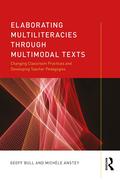
Elaborating Multiliteracies through Multimodal Texts
Elaborating Multiliteracies through Multimodal Texts - Changing Classroom Practices and Developing Teacher Pedagogies: ab 38.99 €- Shop: ebook.de
- Price: 38.99 EUR excl. shipping
-
La Superbe
In 1704 (or maybe slightly earlier) a set of harpsichord pieces was published, composed by Louis-Nicolas Clérambault. Born in 1676, he was recognised as one of Paris' leading musicians of his time. He became famous for his sonates, cantates and pièces d'orgue. Though less often performed nowadays, his harpsichord pieces show his great ability to write elegantly embellished, expressive melodies. The first set of pieces on this CD, in C-major, opens with a 'Prélude non mesuré' in the style of his great predecessors, Louis Couperin and Henry d'Anglebert. The following pieces in this suite are rather conventional and academic in their use of the traditional dance forms and harmonic progression. In the doubles of the 'Allemande' and 'Gavotte' we recognize the 17th century way of elaborating a dance movement with an adorned variation. Francois Couperin, the second composer on this CD, had a rather unconventional approach in combining harpsichord pieces into sets, not naming them 'Suite' but calling them 'Ordre'. Furthermore, the regular dance forms became a pattern, used to paint, as it were, a portrait in music of a person, an event or whatever else occurred to his creative mind. In his '17th Ordre' (published in his 3rd book of harpsichord pieces, 1722) he sets to music a fine portrait of his great contemporary viola da gamba player Antoine Forqueray. In 'La Suberbe', Couperin makes use of the gravity of the ancient allemande to give shape to the nobleness that Forqueray revealed in his playing. One recognises also the imitative motives and so called fake polyphony (a two-part writing in broken chords) that Forqueray obviously would have brought to life in his playing. The key is e-minor, especially expressive in the tuning used in this recording, the temperament ordinaire. This noble piece is followed by a pretty piece in which Couperin evokes 'Les Petits Moulins à vent'. Usually this title is interpreted as a reference to the Parisian windmills. The lightness of the piece and the small, repeated musical motives makes one rather think of the small paper windmills on top of wooden sticks that bring great amusement to children. One can easily imagine the repeated blowing in order to keep the small moulins moving. From time to time they nearly stop, just to be blown in action again. The following rondeau 'Timbres' could be interpreted as a musical painting of little chimes. One can employ the art of playing inégale to give shape most effectively to the irregular sounding bells. A rather old-fashioned 'Courante' follows to give way to 'Les Petites Crémières de Bagnolet'. It is not difficult to hear in the melodic lines the chattering among milkmaids in the Parisian suburb of Bagnolet. The next composer on this CD, Jacques Duphly, of whom little is known, published his harpsichord works in four books. A mixture of conventional musical portraits and dance forms can be found next to experiments in new keyboard techniques that emerged in the later 18th century. In 'La Forqueray' (from his 3rd book, 1758) we find a nice, but rather old-fashioned portrait of the earlier mentioned Antoine Forqueray, including the imitative melodic fragments and fake polyphony. The key (f-minor) is very expressive! On the other hand, in the Chaconne we find Duphly exploiting all kinds of new-fashioned keyboard techniques such as broken chords over several octaves and so called Alberti-basses. His 1st, 2nd and 4th book contain only pieces for harpsichord solo. Also, in his 3rd book he published 6 pieces for harpsichord accompanied by violin. This genre emerged from the beginning of the 18th century as a medium to combine musical instruments in a chamber music setting, most probably with the aim to encourage musical practice in domestic setting. In his 3 pieces in F-major, Duphly exploits two ways of writing accompanied harpsichord music: in the 'Ouverture' (and also in the refrain of 'La DeMay') the violin plays in unison with the harpsichord, thus enhancing the expressiveness of the harpsichord tone. In the other pieces, Duphly writes an obligato part for the violin, achieving a very attractive musical dialogue.- Shop: odax
- Price: 29.55 EUR excl. shipping
-
No Fear Music
No Fear Music-Jazz from Spain. Recorded in Granada their CD includes exciting original compositions and unique renditions of famous standards "Laura" and Besame Mucho." Jesús Henandez-Piano David Defries-Trumpet and Flugelhorn Valantín Iturat-Drums Juan Masana-Bass By the way... Today, the world is saturated with the sounds of mechanically reproduced music. Many musicians, whose only wish is to play live, are obliged to record their offerings before they go out the road, so that they are already known to the public, and can thus guarantee a concert promoter a fair return, their "product", having had an airing in the media. It was not always so: the pianist, Bill Evans, when asked why he had not recorded for sometime, said he only recorded when he had Something to Say. As with music, so in theatre. The Marx Brothers took their routines round provincial American theatres for several months, elaborating and cutting their scripts according to public reaction, before returning to Hollywood to film the final version. 70 odd years have passed since Bela Bartok delivered a lecture at an American university, anticipating some of the changes in humanity effected by recorded music. NO FEAR MUSIC was born of a collaboration between Jesús Hernández & David Defries, playing as a duo in schools thought Andalucía. Returning home to Granada, they sought the collaboration of Juan Masana, seeking ways to expand the role of the Bass. Then, as they started to play concerts as a quartet, came Valentin Iturat, who with good taste and varied experience, earthed the disparate rhythmic labyrinths, inherent in the workings of two Geminis. Thus, their music is the fruit of shared experience over time. Not only had they recorded the music live in 2 days, near Granada, Spain, to become known, in order to play live, but also, because they hope to have Something to Say.- Shop: odax
- Price: 20.99 EUR excl. shipping

