51 Results for : inversions
-

Geometric Transformations (eBook, PDF)
This textbook teaches the transformations of plane Euclidean geometry through problems, offering a transformation-based perspective on problems that have appeared in recent years at mathematics competitions around the globe, as well as on some classical examples and theorems. It is based on the combined teaching experience of the authors (coaches of several Mathematical Olympiad teams in Brazil, Romania and the USA) and presents comprehensive theoretical discussions of isometries, homotheties and spiral similarities, and inversions, all illustrated by examples and followed by myriad problems left for the reader to solve. These problems were carefully selected and arranged to introduce students to the topics by gradually moving from basic to expert level. Most of them have appeared in competitions such as Mathematical Olympiads or in mathematical journals aimed at an audience interested in mathematics competitions, while some are fundamental facts of mathematics discussed in the framework of geometric transformations. The book offers a global view of the geometric content of today's mathematics competitions, bringing many new methods and ideas to the attention of the public. Talented high school and middle school students seeking to improve their problem-solving skills can benefit from this book, as well as high school and college instructors who want to add nonstandard questions to their courses. People who enjoy solving elementary math problems as a hobby will also enjoy this work.- Shop: buecher
- Price: 48.95 EUR excl. shipping
-

Black Light
The first monograph from the cutting-edge New York artist, with an essay by Brian Keith Jackson.Kehinde Wiley painted President Obama's official portrait and this is an early book from him documenting his extraordinary talents. "For most of Kehinde Wiley's very successful career, he has created large, vibrant, highly patterned paintings of young African American men wearing the latest in hip hop street fashion. The theatrical poses and objects in the portraits are based on well-known images of powerful figures drawn from seventeenth- through nineteenth-century Western art. Pictorially, Wiley gives the authority of those historical sitters to his twenty-first-century subjects." -National Portrait Gallery "My intention is to craft a world picture that isn't involved in political correctives or visions of utopia. It's more of a perpetual play with the language of desire and power." -Kehinde Wiley "Wiley inserts black males into a painting tradition that has typically omitted them or relegated them to peripheral positions. At the same time, he critiques contemporary portrayals of black masculinity itself…. He systematically takes a 'pedestrian' encounter with African-American men, elevates it to heroic scale, and reveals-through subtle formal alterations-that postures of power can sometimes be seen as just that, a pose." -Art in America Los Angeles native and New York-based visual artist Kehinde Wiley has firmly situated himself within art history's portrait painting tradition. As a contemporary descendent of a long line of portraitists-including Reynolds, Gainsborough, Titian, Ingres, and others-Wiley engages the signs and visual rhetoric of the heroic, powerful, majestic, and sublime in his representation of urban black and brown men found throughout the world. By applying the visual vocabulary and conventions of glorification, wealth, prestige, and history to subject matter drawn from the urban fabric, Wiley makes his subjects and their stylistic references juxtaposed inversions of each other, imbuing his images with ambiguity and provocative perplexity. In Black Light, his first monograph, Wiley's larger-than-life figures disturb and interrupt tropes of portrait painting, often blurring the boundaries between traditional and contemporary modes of representation and the critical portrayal of masculinity and physicality as it pertains to the view of black and brown young men. The models are dressed in their everyday clothing, most of which is based on far-reaching Western ideals of style, and are asked to assume poses found in paintings or sculptures representative of the history of their surroundings. This juxtaposition of the "old" inherited by the "new"-who often have no visual inheritance of which to speak-immediately provides a discourse that is at once visceral and cerebral in scope. Without shying away from the socio-political histories relevant to the subjects, Wiley's heroic images exhibit a unique modern style that awakens complex issues which many would prefer remain mute.- Shop: buecher
- Price: 71.99 EUR excl. shipping
-

Chords for Guitar (eBook, PDF)
"Chords For Guitar is written in a concise and clear manner that will be easy to understand by anyone with basic music knowledge. A consistent and simple approach that will prove to be a great tool for those hoping to expand their knowledge on the fret-board." Danny McCrum - Professional Guitarist (New Zealand)"Gareth Evan's guitar chord book is one of the most thorough and in-depth books I have ever seen. If you're armed with one of these books, you will have everything you will ever require to know all about chords." Tony Cox - Award winning Acoustic guitarist (South Africa) is about moveable chord shapes based on the CAGED guitar system. Rather than presenting the same shapes for the same chord types as different chords when moved up or down the fret-board, giving 1000's of chords, Chords for Guitar makes this into a simple unified process by showing only the moveable shapes and how to move them up or down the fret-board, allowing for more chord types. - Chords for Guitar is a reference of over 200 unique shapes for just over 60 different chord types, from the commonly used chord types such as major, minor, sus2, sus4, add9 and 7th chords to further extended chords, altered chords and inversions, enabling you to find many more chords yourself and get a better understanding of the fret-board. - The root note location within all of the guitar chords is clearly marked out, enabling you to transpose its moveable shape up and down the fret-board. Each chord type has a question to make sure you're on track to being able to locate guitar chords yourself; shift the root note to its note name location (e.g. C, F#, G etc.) apply the chord shape, then check the answer at the back. - Theory and chord construction are explained using piano keys for the simplicity of its linear layout of notes, then applied to the six-string guitar, from the basics of using odd numbered intervals (e.g. 1, 3, 5 etc.) to the compound intervals within extended chords and alterations. "I had wanted to start playing less with a capo, and more with an ability to transpose chords just by being more familiar with the fret board in it's entirety. This book teaches you exactly this. Highly recommended." Rebecca Cullen, Performing Musician & Composer (UK) "At the School of Guitar we always use the CAGED system but we have never seen it applied so well to all chords. I love the way each transposable version of the chord is linked to an open chord. Simply the best book of chords we have seen." Cormac O Caoimh, School of Guitar (Ireland) "For those students of guitar who are looking for an explanation of this famed system of learning the guitar fretboard, in a relatively fast, painfree and efficient manner, this is a wonderful book. You will find many subtle chords that you hadn't expected were easily movable." Marion Arts - Guitar Teacher, Performer & Composer (New Zealand)- Shop: buecher
- Price: 3.99 EUR excl. shipping
-

Algorithm Design: Pearson New International Edition
August 6, 2009 Author, Jon Kleinberg, was recently cited in the New York Times for his statistical analysis research in the Internet age. Algorithm Design introduces algorithms by looking at the real-world problems that motivate them. The book teaches students a range of design and analysis techniques for problems that arise in computing applications. The text encourages an understanding of the algorithm design process and an appreciation of the role of algorithms in the broader field of computer science. Features + Benefits Focus on problem analysis and design techniques. Discussion is grounded in concrete problems and examples rather than abstract presentation of principles, with representative problems woven throughout the text. Over 200 well crafted problems from companies such as Yahoo!® and Oracle®. Each problem has been class tested for usefulness and accuracy in the authors' own undergraduate algorithms courses. Broad coverage of algorithms for dealing with NP-hard problems and the application of randomization, increasingly important topics in algorithms. Algorithm DesignJon Kleinberg and Eva TardosTable of Contents 1 Introduction: Some Representative Problems 1.1 A First Problem: Stable Matching 1.2 Five Representative Problems Solved ExercisesExcercisesNotes and Further Reading2 Basics of Algorithms Analysis 2.1 Computational Tractability 2.2 Asymptotic Order of Growth Notation 2.3 Implementing the Stable Matching Algorithm using Lists and Arrays 2.4 A Survey of Common Running Times 2.5 A More Complex Data Structure: Priority Queues Solved Exercises Exercises Notes and Further Reading3 Graphs 3.1 Basic Definitions and Applications 3.2 Graph Connectivity and Graph Traversal 3.3 Implementing Graph Traversal using Queues and Stacks 3.4 Testing Bipartiteness: An Application of Breadth-First Search 3.5 Connectivity in Directed Graphs 3.6 Directed Acyclic Graphs and Topological Ordering Solved Exercises Exercises Notes and Further Reading 4 Divide and Conquer 4.1 A First Recurrence: The Mergesort Algorithm 4.2 Further Recurrence Relations 4.3 Counting Inversions 4.4 Finding the Closest Pair of Points 4.5 Integer Multiplication 4.6 Convolutions and The Fast Fourier Transform Solved Exercises Exercises Notes and Further Reading5 Greedy Algorithms 5.1 Interval Scheduling: The Greedy Algorithm Stays Ahead 5.2 Scheduling to Minimize Lateness: An Exchange Argument 5.3 Optimal Caching: A More Complex Exchange Argument 5.4 Shortest Paths in a Graph 5.5 The Minimum Spanning Tree Problem 5.6 Implementing Kruskal's Algorithm: The Union-Find Data Structure 5.7 Clustering 5.8 Huffman Codes and the Problem of Data Compression*5.9 Minimum-Cost Arborescences: A Multi-Phase Greedy Algorithm Solved Exercises Excercises Notes and Further Reading 6 Dynamic Programming 6.1 Weighted Interval Scheduling: A Recursive Procedure 6.2 Weighted Interval Scheduling: Iterating over Sub-Problems 6.3 Segmented Least Squares: Multi-way Choices 6.4 Subset Sums and Knapsacks: Adding a Variable 6.5 RNA Secondary Structure: Dynamic Programming Over Intervals 6.6 Sequence Alignment 6.7 Sequence Alignment in Linear Space 6.8 Shortest Paths in a Graph 6.9 Shortest Paths and Distance Vector Protocols *6.10 Negative Cycles in a Graph Solved ExercisesExercisesNotes and Further Reading7 Network Flow 7.1 The Maximum Flow Problem and the Ford-Fulkerson Algorithm 7.2 Maximum Flows and Minimum Cuts in a Network 7.3 Choosing Good Augmenting Paths *7.4 The Preflow-Push Maximum Flow Algorithm 7.5 A First Application: The Bipartite Matching Problem 7.6 Disjoint Paths in Directed and Undirected Graphs 7.7 Extensions to the Maximum Flow Problem 7.8 Survey Design 7.9 Airline Scheduling 7.10 Image Segmentation 7.11 Project Selection 7.12 Baseball Elimination *7.13 A Further Direction: Adding Costs to the Matching Problem Solved ExercisesExercisesNotes and Further Reading 8 NP and Computational Intractability 8.1 Polynomial-Time Reductions 8.2 Reductions via "Gadgets": The Satisfiability Problem 8.3 Efficient Certification and the Definition of NP 8.4 NP-Complete Problems 8.5 Sequencing Problems 8.6 Partitioning Problems 8.7 Graph Coloring8.8 Numerical Problems 8.9 Co-NP and the Asymmetry of NP8.10 A Partial Taxonomy of Hard Problems Solved Exercises Exercises Notes and Further Reading9 PSPACE: A Class of Problems Beyond NP9.1 PSPACE 9.2 Some Hard Problems in PSPACE 9.3 Solving Quantified Problems and Games in Polynomial Space9.4 Solving the Planning Problem in Polynomial Space9.5 Proving Problems PSPACE-Complete Solved ExercisesExercisesNotes and Further Reading 10 Extending the Limits of Tractability 10.1 Finding Small Vertex Covers 10.2 Solving NP-Hard Problem on Trees 10.3 Coloring a Set of Circular Arcs *10.4 Tree Decompositions of Graphs *10.5 Constructing a Tree Decomposition Solved Exercises Exercises Notes and Further Reading11 Approximation Algorithms 11.1 Greedy Algorithms and Bounds on the Optimum: A Load Balancing Problem 11.2 The Center Selection Problem 11.3 Set Cover: A General Greedy Heuristic 11.4 The Pricing Method: Vertex Cover 11.5 Maximization via the Pricing method: The Disjoint Paths Problem 11.6 Linear Programming and Rounding: An Application to Vertex Cover *11.7 Load Balancing Revisited: A More Advanced LP Application 11.8 Arbitrarily Good Approximations: the Knapsack Problem Solved ExercisesExercisesNotes and Further Reading 12 Randomized Algorithms 12.1 A First Application: Contention Resolution 12.2 Finding the Global Minimum Cut 12.3 Random Variables and their Expectations 12.4 A Randomized Approximation Algorithm for MAX 3-SAT 12.5 Randomized Divide-and-Conquer: Median-Finding and Quicksort 12.6 Hashing: A Randomized Implementation of Dictionaries 12.7 Finding the Closest Pair of Points: A Randomized Approach 12.8 Randomized Caching 12.9 Chernoff Bounds 12.10 Load Balancing *12.11 Packet Routing 12.12 Background: Some Basic Probability DefinitionsSolved ExercisesExercisesNotes and Further Reading 13 Local Search 13.1 The Landscape of an Optimization Problem 13.2 The Metropolis Algorithm and Simulated Annealing 13.3 An Application of Local Search to Hopfield Neural Networks 13.4 Maximum Cut Approximation via Local Search 13.5 Choosing a Neighbor Relation *13.6 Classification via Local Search 13.7 Best-Response Dynamics and Nash EquilibriaSolved ExercisesExercisesNotes aAugust 6, 2009 Author, Jon Kleinberg, was recently cited in the for his statistical analysis research in the Internet age. Algorithm Design introduces algorithms by looking at the real-world problems that motivate them. The book teaches students a range of design and analysis techniques for problems that arise in computing applications. The text encourages an understanding of the algorithm design process and an appreciation of the role of algorithms in the broader field of computer science.- Shop: buecher
- Price: 94.99 EUR excl. shipping
-
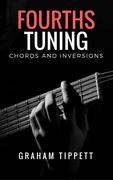
Fourths Tuning Chords and Inversions
Fourths Tuning Chords and Inversions - Chords and Inversions: ab 4.84 €- Shop: ebook.de
- Price: 4.84 EUR excl. shipping
-
-

God in Pain
God in Pain - Inversions of Apocalypse: ab 19.99 €- Shop: ebook.de
- Price: 19.99 EUR excl. shipping
-
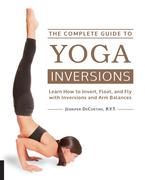
The Complete Guide to Yoga Inversions
The Complete Guide to Yoga Inversions - Learn How to Invert Float and Fly with Inversions and Arm Balances: ab 19.99 €- Shop: ebook.de
- Price: 19.99 EUR excl. shipping
-

Anatomy for Arm Balances and Inversions
Anatomy for Arm Balances and Inversions - Yoga Mat Companion 4: ab 20.49 €- Shop: ebook.de
- Price: 20.49 EUR excl. shipping
-

Strings and Ivory: Chords and Inversions
Strings and Ivory: Chords and Inversions: ab 8.99 €- Shop: ebook.de
- Price: 8.99 EUR excl. shipping