Did you mean:
Embellishments64 Results for : embellishment
-

The Battle on the Ice: The History and Legacy of the Slavs’ Decisive Victory Against the Teutonic Knights , Hörbuch, Digital, ungekürzt, 112min
Includes a bibliography for further reading Includes a table of contents “He was taller than others and his voice reached the people as a trumpet, and his face was like the face of Joseph, whom the Egyptian Pharaoh placed as next to the king after him of Egypt. His power was a part of the power of Samson and God gave him the wisdom of Solomon ... this Prince Alexander: he used to defeat but was never defeated…." (The Second Pskovian Chronicle)In 1938, the Soviet Union film company Mosfilm released the motion picture Alexander Nevsky, directed by Sergei Eisenstein. It is a historical drama depicting the defense of the Republic of Novgorod against an invasion of the Teutonic Knights in the mid-13th century. The eponymous hero of the story, the Prince of Novgorod, leads his troops against the German knights on a field of solid ice. During the battle, called the Battle on the Ice or the Battle of Lake Peipus, the ice breaks and many of the knights drown in the freezing waters, but Nevsky is victorious and the pernicious Germans are vanquished forever. Far from an attempt to portray historical events, Alexander Nevsky is a Stalinist propaganda piece in which the Russian people defy and halt the eastward expansion of the German menace. It is an obvious allegory of the Soviet Union defying Nazi Germany at a time when Soviet-German relations were at their most acrid before World War II. The clothing of the Teutonic warriors inaccurately display swastikas, and the famous scene where they are swallowed up by the ice is also a Stalinist embellishment. Of course, Soviet Russia was not the first to use the historical conflict between the German West and the Slavic East for propaganda purposes. The German defeat of Russia at the Battle of Tannenberg in 1914 was portrayed as revenge for the Battle of Grunwald in 1410, when the Poles and Lithuanians overwhelmed the flower of the German nobility. The ungekürzt. Language: English. Narrator: Stephen Platt. Audio sample: https://samples.audible.de/bk/acx0/193701/bk_acx0_193701_sample.mp3. Digital audiobook in aax.- Shop: Audible
- Price: 9.95 EUR excl. shipping
-

Buckingham Palace: The History of the British Royal Family's Most Famous Residence , Hörbuch, Digital, ungekürzt, 80min
When people think of the British Royal family, and more specifically where they live, the first image that often pops into mind is that of stately Buckingham Palace, with its changing of the guard and the occasional royal coach leaving or entering. Others may think of the royal country estate of Windsor Castle, a favorite of both Britain's longest-reigning and second longest-reigning monarchs. And there was a time when both royal residences played second fiddle to a much better known home, the elegant Kensington Palace. In his multi-volume work, Old and New London (1878), Edward Walford wrote, "It has often been said by foreigners that if they were to judge of the dignity and greatness of a country by the palace which its sovereign inhabits, they would not be able to ascribe to Her Majesty Queen Victoria that proud position among the 'crowned heads' of Europe which undoubtedly belongs to her. But though Buckingham Palace is far from being so magnificent as Versailles is, or the Tuilleries once were, yet it has about it an air of solidity and modest grandeur, which renders it no unworthy residence for a sovereign who cares more for a comfortable home than for display." This is ultimately what palaces are all about: power and impressions. Buckingham Palace is not different, for though it was originally built as a home of a private citizen, once a king bought it, its future was sealed. Walford continued, "Indeed, it has often been said that, with the exception of St. James's, Buckingham Palace is the ugliest royal residence in Europe; and although vast sums of money have been spent at various times upon its improvement and embellishment, it is very far from being worthy of the purpose to which it is dedicated - lodging the sovereign of the most powerful monarchy in the world. It fronts the western end of St. James's Park, which here converges to a narrow point; the Mall, upon the north, and Birdcage Walk, upon the south, almost meeting before its g ungekürzt. Language: English. Narrator: Kenneth Ray. Audio sample: https://samples.audible.de/bk/acx0/083610/bk_acx0_083610_sample.mp3. Digital audiobook in aax.- Shop: Audible
- Price: 9.95 EUR excl. shipping
-
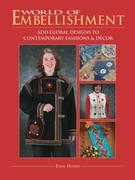
World Of Embellishment
World Of Embellishment - Add Global Designs to Contemporary Fashions & Décor: ab 13.99 €- Shop: ebook.de
- Price: 13.99 EUR excl. shipping
-
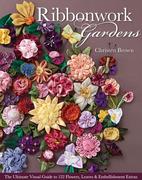
Ribbonwork Gardens
Ribbonwork Gardens - The Ultimate Visual Guide to 122 Flowers Leaves & Embellishment Extras: ab 17.99 €- Shop: ebook.de
- Price: 17.99 EUR excl. shipping
-
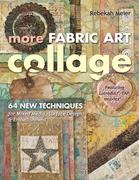
More Fabric Art Collage
More Fabric Art Collage - 64 New Techniques for Mixed Media Surface Design & Embellishment: ab 17.99 €- Shop: ebook.de
- Price: 17.99 EUR excl. shipping
-
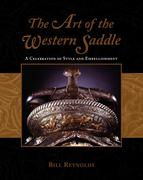
Art of the Western Saddle
Art of the Western Saddle - A Celebration Of Style And Embellishment: ab 47.99 €- Shop: ebook.de
- Price: 47.99 EUR excl. shipping
-
Jazz Improvisation Using Simple Melodic Embellishment
Jazz Improvisation Using Simple Melodic Embellishment: ab 48.99 €- Shop: ebook.de
- Price: 48.99 EUR excl. shipping
-
Johann Sebastian Bach: Six Suites for Solo Violoncello, Partita for Solo Flute Trascribed with Embellishment for Harpsichord
No description.- Shop: odax
- Price: 23.01 EUR excl. shipping
-
Music for Solo Cello
Cassado: Suite for solo cello I. Preludio - Fantasia II. Sardana (Danza) III. Intermezzo e danza finale Ysaye: Sonate Op. 28 for solo cello I. Lento e sempre sostenuto II. Poco allegretto e grazioso III. Adagio IV. Allegro Tempo fermo Ligeti: Sonate for solo cello I Dialogo II Capriccio Kodaly: Suite Op. 8 for solo cello I. Allegro maestoso ma appassionato II. Adagio III. Allegro molto vivace ---------------- When Johann Sebastian Bach composed his six cello suites around the year 1720, they were labeled "6 Suites a Violoncello Solo senza Basso." This curious title can be explained by the fact that it was a novelty at the time to write for cello alone, an example that would not be followed any time soon: not counting the various solo cello studies, capriccios, and other pieces composed by cellists for educational purposes, one needs to wait nearly two centuries before finding important repertoire in the medium. The famous Catalan cellist Pau Casals (1876-1973) was partially responsible for the rebirth of the solo cello repertoire: his "discovery" of Bach's cello suites at the beginning of his career and his subsequent efforts to propagate them helped convince the younger generation of composers to write for solo cello. The four works presented on this CD illustrate the rise of the modern solo cello repertoire. Common characteristics of this collection include a powerful rhetorical discourse, a rhapsodic character, and a complete technical mastery in writing for the instrument. That the four composers represented here had an excellent knowledge of the cello came from their own practical experience: Zoltán Kodály and György Ligeti had studied cello before becoming composers, the famous Belgian violinist Eugène Ysaÿe was competent enough to play the cello part in private chamber music evenings, and Gaspar Cassadó, Casals's student, was a celebrated cello virtuoso. Kodály's Sonata for Solo Cello, Op. 8 (1915) and Cassadó's Suite for Cello Solo (1925) are colored with regional flavor. As early as 1905, Zoltán Kodály (1882-1967) had traveled with Bartók to record the peasant and popular music of Central Europe. Reminiscences of these ethnomusicological travels are present in Kodály's sonata, not only in the imitation of traditional instruments (violin, percussion, cimbalom, etc.) and their modes of playing, but also in the poetic description of the landscapes in which the music was born. Perhaps in a more folkloric way but still with much panache and poetry, Gaspar Cassadó (1897-1966), in his Suite for Solo Cello, imitates flamenco singing and guitar playing. He also quotes the Catalan sardana dance with it's introduction for flabiol (Catalan piccolo recorder), it's grotesque cobla (traditional Catalan ensemble), and indispensable nostalgic solos played by the tible (Catalan shawm). Like Fritz Kreisler, Cassadó was accused of musicological crimes: he attributed some of his own compositions to famous composers of the past such as Frescobaldi, Couperin, Boccherini, and Schubert, calling them "transcriptions." A good example of Cassadó's skill in pastiche can be found in the second movement, Sardana, at the expression marking burlesco: here he literally forces the cellist to imitate the approximate intonation of a traditional village ensemble by writing a series of unisons in such wide fingering spans that no cellist can play them in tune. We should not forget to mention that the first theme of Cassadó's suite is an embellishment of the opening of Kodály's sonata, a nod to the older Hungarian composer. György Ligeti (1923-2006) wrote the two movements of his Sonata for Solo Cello at a five-year interval. The first part, composed in 1948 for a young cellist with whom he was secretly in love, consists of a musical dialogue between a woman and a man. The composer's gift was not reciprocated, however, and the work was left unperformed until Ligeti added a second movement in 1953 in response to a famous female cellist (with whom he was not in love, as the composer tells us), who commissioned a full sonata from him. During the communist period, the Hungarian Composer's Union refused to allow the work to be published or performed on the grounds that the second movement was too modern. This might amuse us today, because the work - composed under the influence of Kodály and Bartók - is much more traditional than Ligeti's later compositions. Like Cassadó and Casals, the violinist Eugène Ysaÿe (1858-1931) was a great admirer of Bach's solo works and among the first to include them on his concert programs. Ysaÿe shows his devotion to Bach in his Violin Sonata No. 2 "Obsession," where he quotes the opening of the Partita for Solo Violin in E-major. Although there are no direct quotations from Bach's solo violin works in Ysaÿe's Sonata for Solo Cello, Op. 28 (1923), we sense nevertheless that the famous violinist was more familiar with Bach's writing for solo violin than solo cello. This can be heard in the many chords and detailed contrapuntal writing, in Bach's solo cello works, chords are less frequent and the polyphonic lines are distributed in a more arpeggiated fashion. Ysaÿe's cello sonata, not as well-known as his six sonatas for violin but sharing many of the same difficulties, includes the composer's own fingerings. The work was dedicated to the Belgian cellist Maurice Dambois, with whom - along with pianist Yves Nat - Ysaÿe had formed a trio. While Pau Casals played a crucial role in the development of the solo cello repertoire at the beginning of the twentieth century, cellists such as Siegfried Palm and Mstislav Rostropovich inspired the following generations of composers. One needs only to reflect on composers such as Dallapiccola, Zimmermann, Henze, Scelsi, Britten, Sessions, Penderecki, Xenakis, Dutilleux, Ginastera, and Berio to understand the richness and diversity of the modern solo cello repertoire, which we hope to present to you in future recordings. NICOLAS DELETAILLE - TRANSLATION THOMAS SVATOS Nicolas Deletaille After having received his musical education in Belgium and in the USA, Nicolas Deletaille has begun his professional life as a concert performer. In the same time, he has recorded the Bach six Cello Suites, the Beethoven five Cello Sonatas, major works from the solo repertoire (Kodály, Cassadó, Ysaÿe, Ligeti) as well as chamber music CDs (Schubert, Dvorák, Franck, Tchaikovsky,...) Nicolas Deletaille has also earned distinction as an arpeggione player by recording the Schubert arpeggione sonata in the rare original arpeggione version with the vienese maestro Paul Badura-Skoda on an original 1820 pianoforte. Nicolas Deletaille has collaborated extensively with composers of our time. He has given approximately 50 world premiere creations, most of which were pieces written for him by composers from Belgium, France, Taiwan, USA, Italy, England, Switzerland, Korea, Norway and Canada. Nicolas Deletaille is currently a faculty member of the Eastern Mediterranean University, TRNC. Français Quand Johann Sebastian Bach composa ses six suites pour violoncelle vers 1720, elles furent baptisées « 6 Suites a Violoncello Solo senza Basso ». Ce titre curieusement redondant s'explique par l'originalité d'écrire à cette époque pour violoncelle seul. Cet exemple ne sera d'ailleurs pas suivi de longtemps : mis à part d'innombrables études, caprices et autres exercices de virtuosité, écrits par les violoncellistes eux-mêmes dans un but purement pédagogique, il faudra attendre que le célèbre violoncelliste catalan Pau Casals se fasse l'ambassadeur des Suites de Bach lors de ses tournées de concerts à l'aube du XXe siècle pour que des compositeurs se montrent peu à peu enclins à écrire des œuvres importantes pour violoncelle seul. Les quatre œuvres reprises sur ce CD, composées au cours de la première moitié du XXe siècle, s'inscrivent dans la cadre de ce développement du répertoire pour violoncelle seul. Elles ont en commun un discours rhétorique puissant, un c- Shop: odax
- Price: 24.64 EUR excl. shipping
-
Solo Son Opus 1
BENEDETTO MARCELLO hailed from a wealthy Venetian family and held posts in several regional governments. He was not a professional musician but he often composed music for weekly academies. These social gatherings of the nobility featured poetry, music, oratory and debate. Admired throughout Europe, Marcello's music was freely transcribed and arranged by JS Bach, Rossini, Bizet, Verdi and a host of others. In his sacred vocal works Marcello displays a profound religious devotion but also he shows a sharp wit and sense of humor in his comic satires. Highly expressive, he is masterful at communicating mood. While these sonatas were published late in his life, they were probably composed much earlier. Originally conceived for cello, they translate effectively to other instruments, low brass players have adopted them as standard repertoire. This performance is given with free embellishment in the Italian style and pursues a variety of Affekt ranging from profound to comic. MIKE HALL teaches trombone/euphonium and brass chamber music at Old Dominion University in Norfolk, VA, and serves as Literature Reviews Editor for the International Trombone Association Journal. He previously served on the faculties of the University of Kansas and Eastern Michigan University. Dr. Hall has performed extensively throughout the United States, Canada, Mexico, Europe and China performing a range of styles and literature with symphony orchestras, wind and chamber ensembles and as featured soloist. He also has an extensive background in commercial music backing entertainers, playing in large and small group jazz settings, and performing in theater and studio recording ensembles. His extensive study of Baroque performance practice as applied to low brass instruments has led to three solo recordings: Arcangelo Corelli Solo Chamber Sonatas, Opus 5, J.S. Bach: The Gamba Sonatas and Benedetto Marcello Solo Sonatas, Opus 1. His performing editions of the Marcello sonatas are available through Cherry Classics Music, Vancouver BC, Canada. REBECCA BELL studied at the Royal College of Music, London, where she won the prize for clavichord playing while studying with Ruth Dyson and Robert Woolley. She performs with the Kansas City Symphony and the Kansas City Chamber Orchestra and with the opera studio of Bill Hall. She is a member of the American Guild of Organists and is the principal organist at All Saints Episcopal Church, Kansas City, MO. CHRISTOPHER WHITE is Assistant Principal Bass of the Virginia Symphony Orchestra and is also a member of the Grant Park Orchestra in Chicago. He graduated from the University of Rhode Island and the Manhattan School of Music, where he received the Master of Music degree. He teaches bass at Old Dominion University, the College of William & Mary, Christopher Newport University, and the Virginia Governor's School for the Arts.- Shop: odax
- Price: 27.04 EUR excl. shipping


