72 Results for : kut
-

Kut 1916: Courage and Failure in Iraq
Kut 1916: Courage and Failure in Iraq - Courage and Failure in Iraq: ab 19.49 €- Shop: ebook.de
- Price: 19.49 EUR excl. shipping
-

A Kut Above The Rest 3
A Kut Above The Rest 3 - Lovin' A Female Boss: ab 9.99 €- Shop: ebook.de
- Price: 9.99 EUR excl. shipping
-

A Kut Above The Rest 2
A Kut Above The Rest 2 - Lovin' A Female Boss: ab 7.99 €- Shop: ebook.de
- Price: 7.99 EUR excl. shipping
-

Jaloezie is kut
Jaloezie is kut - Liebe oder Begierde? Oder doch beides?: ab 9.99 €- Shop: ebook.de
- Price: 9.99 EUR excl. shipping
-

A Kut Prisoner (WWI Centenary Series)
A Kut Prisoner (WWI Centenary Series): ab 7.49 €- Shop: ebook.de
- Price: 7.49 EUR excl. shipping
-
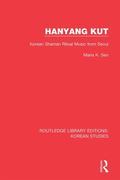
Hanyang Kut
Hanyang Kut - Korean Shaman Ritual Music from Seoul: ab 33.99 €- Shop: ebook.de
- Price: 33.99 EUR excl. shipping
-
-
-
Heimweh Nach Köln-50 Unvergessene Lieder
Willi Ostermann wurde am 01.10.1876 in Mülheim am Rhein geboren. Er verbrachte seine Kindheit in Deutz, das zu der Zeit Garnisonsstadt war. Dort kam er früh mit den durchziehenden Militärmusikkapellen in Kontakt. So verfasste er bereits in der Schule Parodien in Kölner Mundart und kannte immer die neuesten Karnevalslieder auswendig. Neben seiner Lehre trug Willi Ostermann in Gasthäusern eigene Gedichte und Lieder vor. 1906 wurde der Vorsitzende einer Kölner Karnevalsgesellschaft auf ihn aufmerksam und bat ihn, einen Karnevalsschlager für die Session 1906/1907 zu schreiben. So entstand der Titel Däm Schmitz sing Frau eß durchgebrannt. 1908 gewann Ostermann den Preis für das beste Lied in Kölner Mundart. In den folgenden Jahren konnte er diese Erfolge fortsetzen und auch seinen Lebensunterhalt davon bestreiten. Er sang die meisten Titel selbst, schrieb aber auch für andere Künstler. Der Titel Rheinland-Mädel verkaufte allein eine Million Platten. Ende der 20er Jahre hatte Willi Ostermann aufgrund der Weltwirtschaftskrise weniger und schlechter bezahlte Auftritte und er verlegte nun auch Lieder anderer Komponisten und gab das Humor-Wochenblatt Tünnes und Schäl heraus. 1930 gelang ihm der Klassiker Och, wat wor dat fröher schön doch en Colonia, der noch heute zu den Standardtiteln im Kölner Karneval zählt. Seinen letzten Auftritt absolvierte Willi Ostermann im Juli 1936 in Bad Neuenahr, wo er auf der Bühne zusammenbrach und sofort in ein Kölner Krankehaus eingeliefert und am Magen operiert wurde. Dort schrieb er sein letztes Lied Heimweh nach Köln. Es sollte nach seinem Tod zu seinem bekanntesten Lied werden. Am 06.08.1936 starb Willi Ostermann im Krankenhaus. TRACKS: Disk 1 1. Heimweh nach Köln (Thomas Liessem mit Orchester) 2. Einmal am Rhein 3. Och wat wor dat fröher schön doch en Colonia 4. Die Mösch 5. Rheinlandmädel (Und sollt ich im Leben ein Mädel mal frei n) 6. Däm Schmitz sing Frau ess durchgebrannt 7. Ich trinke auf dein Wohl, mein Schatz 8. Drum rat ich Dir, zieh an den Rhein 9. Ober! Schnell noch eine Runde her 10. Mädel, Mädel komm mit mir den Rhein entlang 11. Summ- un Brumm-Leed 12. Es gibt nur einen deutschen Rhein 13. Rheinische Lieder, schöne Frau n beim Wein 14. Ons kann nix mieh passiere 15. Denn nur der Rhein mit seiner Fröhlichkeit ist schuld 16. Rötsch mer jet 17. Villa Billa (Jetz hät dat Schmitze Billa en Poppelsdorf en Villa) 18. Och, dann freut sich die Mama un dann freut sich die Tant 19. Da wo die sieben Berge... 20. Bei de Kämmerlings - do geiht die Dühr nit op 21. Denn einmal nur im Jahr ist Karneval 22. Kut erop! Kut erop! Kut erop! Bei Palm s do ess de Pief verstopp 23. An der Ahr, an der Ahr... 24. Mit Willi Ostermann am Rhein 1. Teil (Potpourri) 25. Mit Willi Ostermann am Rhein 2. Teil (Potpourri) Disk 2 1. Denk nicht an morgen 2. Wenn du wüßtest... mein Kind (Marschlied der Rheinländer) 3. Wer hätt dat vun d r Tant gedaach 4. Kölsche Mädcher künne bütze... 5. Su schön wor et noch nie! (Su schön wie augenblicklich) 6. Ostermänner Teil 1 (Potpourri) 7. Ostermänner Teil 1 (Potpourri) 8. Ich weiß was von dir 9. Wat summb dat, wat brummb dat, wat eß en d r Luff... 10. Adelche - Adelche! 11. Sehnsucht nach dem Rhein 12. Die Höhnerfarm vum Zilla 13. Die Wienanz han nen Has em Pott (Kölsch Katzeleed) 14. Dröm loß mer noch ens schunkele 15. Wenn in Colonia der Karneval beginnt 16. Et geiht nix för ne richt ge Polkaschrett 17. Eu-Eu-Eugenie 18. Nä - ich mag dich nit mie 19. Dä Klein dä muß ene Nüggel hann (Jo, wat hät hä dann?) 20. Wenn du (noch) eine Schwiegermutter hast 21. Kinddauf-Fess unger Krahnebäume 22. Loblied auf den 34er Wein 23. Woröm solle mer ald en de Heija gon? 24. Eins ins Andere 1. Teil 25. Eins ins Andere 2. Teil- Shop: odax
- Price: 11.99 EUR excl. shipping
-
Unseen
Roddy Barnes was born in 1963 in Blanchard, Iowa, a small rural farm town of around 100 people. His parents, Kenneth and Carol Barnes, were pig and grain farmers and some of Roddy's first memories were of many hours in the bean fields, pulling weeds. To amuse himself, Roddy would make up songs as he worked - the start to his musical creativity. His first musical influence was church. Roddy's parents had an old upright and at age four, he began picking out hymns. Singing was also a strong passion and his first solo, 'Jesus Wants Me for a Sunbeam,' he performed at age five. His first music gig came at age 15 where he played and sang in a local hotel, 'The Walnut Inn' in Tarkio, Missouri. In high school, he was awarded Musician of the Year three consecutive years, the Chopin Award and the John Philip Sousa Award both two years straight, was a member of district and state band and district chorus. He received #1 ratings at the state level on solo piano, trumpet, and voice. In 1979 as a high school sophomore, he was accepted into the the United States Collegiate Wind Band which performed in New York, England, Germany, Italy, Switzerland and France. In 1981 Roddy was awarded full scholarships to both Missouri Western State College and Kansas University. He chose MWSC. While in college, he studied classical piano, trumpet, voice, composition and theory. As a composer, he wrote an original score for 'Death of a Salesman' performed at the Missouri Repertory Theatre. He also composed music for a commercial about safe sex and scored a short film. He was awarded a grant to the Aspen Music Festival where he studied under world-renowned pianist Rita Sloan-Gottlieb. After receiving his B.A. in Classical Performance in 1988, he was awarded a scholarship to study in France under Francois Rene Duchable. While in France, he performed in blues clubs in several French cities. He was featured in a French paper called 'Le Dauphine' where, it read '(he) has conquered by his talent all the music lovers of the city of the Ducs.' In 1990, Roddy applied for, and received, a scholarship to the Berklee School of Music in Boston, Massachusetts. Along with his studies, he performed blues throughout the city. Roddy returned to the midwest in 1992 and recorded his first album, 'Roll with the Punches,' in Kansas City, MO. New Orleans lured him south where he was able to perform 10 gigs a week. Some of the more notable venues were Tipitinas, Maxwells Toulouse Cabaret, and The Common Ground. While in New Orleans, he recorded three more CDs -- 'Unseen,' 'Betrayed,' and 'Blues Boogie and Soul.' From his 'Betrayed' CD, his composition, 'Because of You,' was recorded by the international blues act, Saffire - The Uppity Blues Women, on Alligator Records. To advance his career, Roddy moved to Austin, Texas in 1996. He was a monthly feature on John Aielli's 'Ecclecticos' on KUT radio showcasing his original songs. He also recorded his 5th CD, 'Broken Wing.' From this CD, another of his compositions, 'Let the Gin Do the Talking,' was covered by Saffire. 2004 finds Roddy in Richmond, Virginia, to collaborate with other artists. Two songs from his 6th CD, 'Ballads and Barrooms,' are being covered by blues artist Ann Rabson on her solo recording. (Ann is a founding member of Saffire.) The Saffire connection continues as Roddy works with another founding member, Gaye Adegbalola, performing classic blues - blues mainly from the 20's and 30's by divas such as Bessie Smith, Alberta Hunter and Ma Rainey. Further, Roddy works with Filipe Rose (the Indian of the Village People) doing musical compositions, arrangements and accompaniment. He also continues to perform solo. In 2007,Roddy wrote original music and lyrics for an adaptation of The Velveteen Rabbit (adapted by KB Saine), which was performed at Sycamore Rouge in Petersburg VA.- Shop: odax
- Price: 22.85 EUR excl. shipping


