76 Results for : tradeoffs
-

The Art of Thinking Clearly
A world-class thinker counts the 100 ways in which humans behave irrationally, showing us what we can do to recognize and minimize these "thinking errors" to make better decisions and have a better lifeDespite the best of intentions, humans are notoriously bad-that is, irrational-when it comes to making decisions and assessing risks and tradeoffs. Psychologists and neuroscientists refer to these distinctly human foibles, biases, and thinking traps as "cognitive errors." Cognitive errors are systematic deviances from rationality, from optimized, logical, rational thinking and behavior. We make these errors all the time, in all sorts of situations, for problems big and small: whether to choose the apple or the cupcake; whether to keep retirement funds in the stock market when the Dow tanks, or whether to take the advice of a friend over a stranger. The "behavioral turn" in neuroscience and economics in the past twenty years has increased our understanding of how we think and how we make decisions. It shows how systematic errors mar our thinking and under which conditions our thought processes work best and worst. Evolutionary psychology delivers convincing theories about why our thinking is, in fact, marred. The neurosciences can pinpoint with increasing precision what exactly happens when we think clearly and when we don't.Drawing on this wide body of research, The Art of Thinking Clearly is an entertaining presentation of these known systematic thinking errors--offering guidance and insight into everything why you shouldn't accept a free drink to why you SHOULD walk out of a movie you don't like it to why it's so hard to predict the future to why shouldn't watch the news. The book is organized into 100 short chapters, each covering a single cognitive error, bias, or heuristic. Examples of these concepts include: Reciprocity, Confirmation Bias, The It-Gets-Better-Before-It-Gets-Worse Trap, and the Man-With-A-Hammer Tendency. In engaging prose and with real-world examples and anecdotes, The Art of Thinking Clearly helps solve the puzzle of human reasoning.- Shop: buecher
- Price: 7.99 EUR excl. shipping
-

The Art of Writing Efficient Programs
Get to grips with various performance improvement techniques such as concurrency, lock-free programming, atomic operations, parallelism, and memory management Key Features:Understand the limitations of modern CPUs and their performance impact Find out how you can avoid writing inefficient code and get the best optimizations from the compiler Learn the tradeoffs and costs of writing high-performance programs Book Description: The great free lunch of "performance taking care of itself" is over. Until recently, programs got faster by themselves as CPUs were upgraded, but that doesn't happen anymore. The clock frequency of new processors has almost peaked. New architectures provide small improvements to existing programs, but this only helps slightly. Processors do get larger and more powerful, but most of this new power is consumed by the increased number of processing cores and other "extra" computing units. To write efficient software, you now have to know how to program by making good use of the available computing resources, and this book will teach you how to do that. The book covers all the major aspects of writing efficient programs, such as using CPU resources and memory efficiently, avoiding unnecessary computations, measuring performance, and how to put concurrency and multithreading to good use. You'll also learn about compiler optimizations and how to use the programming language (C++) more efficiently. Finally, you'll understand how design decisions impact performance. By the end of this book, you'll not only have enough knowledge of processors and compilers to write efficient programs, but you'll also be able to understand which techniques to use and what to measure while improving performance. At its core, this book is about learning how to learn. What You Will Learn:Discover how to use the hardware computing resources in your programs effectively Understand the relationship between memory order and memory barriers Familiarize yourself with the performance implications of different data structures and organizations Assess the performance impact of concurrent memory accessed and how to minimize it Discover when to use and when not to use lock-free programming techniques Explore different ways to improve the effectiveness of compiler optimizations Design APIs for concurrent data structures and high-performance data structures to avoid inefficiencies Who this book is for: This book is for experienced developers and programmers who work on performance-critical projects and want to learn different techniques to improve the performance of their code. Programmers who belong to algorithmic trading, gaming, bioinformatics, computational genomics, or computational fluid dynamics communities can learn various techniques from this book and apply them in their domain of work. Although this book uses the C++ language, the concepts demonstrated in the book can be easily transferred or applied to other compiled languages such as C, Java, Rust, Go, and more.- Shop: buecher
- Price: 47.99 EUR excl. shipping
-

Modern Operating Systems: Global Edition
Modern Operating Systems, Fourth Edition, is intended for introductory courses in Operating Systems in Computer Science, Computer Engineering, and Electrical Engineering programs. The widely anticipated revision of this worldwide best-seller incorporates the latest developments in operating systems (OS) technologies. The Fourth Edition includes up-to-date materials on relevant OS. Tanenbaum also provides information on current research based on his experience as an operating systems researcher. Modern Operating Systems, Third Edition was the recipient of the 2010 McGuffey Longevity Award. The McGuffey Longevity Award recognizes textbooks whose excellence has been demonstrated over time. http://taaonline.net/index.html Teaching and Learning Experience This program will provide a better teaching and learning experience–for you and your students. It will help: Provide Practical Detail on the Big Picture Concepts: A clear and entertaining writing style outlines the concepts every OS designer needs to master. Keep Your Course Current: This edition includes information on the latest OS technologies and developments Enhance Learning with Student and Instructor Resources: Students will gain hands-on experience using the simulation exercises and lab experiments. Features + Benefits Provide Practical Detail on the Big Picture Concepts A clear and entertaining writing style outlines the concepts every OS designer needs to master. In-depth topic coverage includes processes, threads, memory management, file systems, I/O, deadlocks, interface design, multimedia, performance tradeoffs, and the newest trends in OS design. Multimedia file systems are covered–an important topic that most books miss. The chapter on Multimedia Operating Systems has been moved to the Web, primarily to make room for new material and keep the book from growing to a completely unmanageable size. A thorough treatment of computer security includes viruses, worms, malware and other digital pests. This chapter far exceeds anything written in any other book. It also discusses ways to combat them. Keep Your Course Current Coverage of multiprocessors, multicomputers, virtual machines, and distributed systems reflects that the field is rapidly moving from an era of single-processor systems to multicore systems, multiprocessors, and distributed systems. Case studies of popular operating systems: UNIX, Linux, Windows 8, and Android NEW: Chapter 10, on UNIX, Linux, and Android is a revision of the old Chapter 10. The focus is clearly on Linux now, with a great deal of new material about Android, which was not in the previous edition. NEW: Chapter 11 in the third edition was on Windows Vista. A chapter on Windows 8, specifically Windows 8.1, has replaced that. It brings the treatment of Windows completely up to date. NEW and UPDATED: Chapters 2—6 have been updated, with older material removed and some new material added. Chapter 2: Added information on the futex synchronization primitive, and a section about how to avoid locking altogether with Read-Copy-Update. Chapter 3: More focus on modern hardware and less emphasis on segmentation and Multics. Chapter 4: CD-Roms are removed, as they are no longer very common, and replaced with more modern solutions (like flash drives). Also, we added RAID level 6 to the section on RAID. Chapter 5: Older devices like CRT and CD-ROMs have been removed, while new technology, like touch screens have been added. The sections on current research in these chapters have been rewritten from scratch. New problems and programming exercises have been added. NEW: Chapter 7 is completely new. It covers the important topics of virtualization and the cloud. NEW and UPDATED: Chapter 8 is an updated version of the previous material on multiprocessor systems. There is more emphasis on multicore systems now, which have become so important in the past few years. A long section on VMware has been added. NEW and UPDATED: Chapter 9 has been heavily revised and reorganized, with considerable new material on exploiting code bugs, malware, and defenses against them. UPDATED: Chapter 12 is a revised version of Chap. 13 from the previous edition. A Research section in many chapters describes current research in the topic covered by the chapter. Enhance Learning with Student and Instructor Resources Online Exercises provide hands-on experience with building as well as analyzing the performance of OS. In particular, these exercises have been designed to provide experience with analyzing the resource consumptions in Windows and Linux. Simulation Exercises are designed to provide experience with building some key components of an OS, including process scheduling, main memory allocation, paging algorithms and virtual memory, and file systems. Student Tools and Lab Experiments allow students to download the tools and run the experiments to gain deeper knowledge of the subject. Password-Protected Instructor Resources (Select the Resources Tab to View Downloadable Files): Power Point Lecture Slides Figures in both .jpeg and .eps file format Solutions to Exercises CHAPTER 1 "INTRODUCTION"1.1 WHAT IS AN OPERATING SYSTEM? 3 1.1.1 The Operating System as an Extended Machine 4 1.1.2 The Operating System as a Resource Manager 51.2 HISTORY OF OPERATING SYSTEMS 6 1.2.1 The First Generation (1945-55): Vacuum Tubes 7 1.2.2 The Second Generation (1955-65): Transistors and Batch Systems 8 1.2.3 The Third Generation (1965-1980): ICs and Multiprogramming 9 1.2.4 The Fourth Generation (1980-Present): Personal Computers 15 1.2.5 The Fifth Generation (1990-Present): Mobile Computers 191.3 COMPUTER HARDWARE REVIEW 20 1.3.1 Processors 21 1.3.2 Memory 24 1.3.3 Disks 27 1.3.4 I/O Devices 28 1.3.5 Buses 32 1.3.6 Booting the Computer 341.4 THE OPERATING SYSTEM ZOO 35 1.4.1 Mainframe Operating Systems 35 1.4.2 Server Operating Systems 35 1.4.3 Multiprocessor Operating Systems 36 1.4.4 Personal Computer Operating Systems 36 1.4.5 Handheld Computer Operating Systems 36 1.4.6 Embedded Operating Systems. 37 1.4.7 Sensor-Node Operating Systems 37 1.4.8 Real-Time Operating Systems 37 1.4.9 Smart Card Operating Systems 381.5 OPERATING SYSTEM CONCEPTS 38 1.5.1 Processes 39 1.5.2 Address Spaces 41 1.5.3 Files 41 1.5.4 Input/Output 45 1.5.5 Protection 45 1.5.6 The Shell 45 1.5.7 Ontogeny Recapitulates Phylogeny 471.6 SYSTEM CALLS 50 1.6.1 System Calls for Process Management 53 1.6.2 System Calls for File Management 56 1.6.3 System Calls for Directory Management 57 1.6.4 Miscellaneous System Calls 59 1.6.5 The Windows Win32 API 601.7 OPERATING SYSTEM STRUCTURE 62 1.7.1 Monolithic Systems 63 1.7.2 Layered Systems 64 1.7.3 Microkernels 65 1.7.4 Client-Server Model 68 1.7.5 Virtual Machines 69 1.7.6 Exokernels 731.8 THE WORLD ACCORDING TO C 73 1.8.1 The C Language 73 1.8.2 Header Files 74 1.8.3 Large Programming Projects 75 1.8.4 The Model of Run Time 761.9 RESEARCH ON OPERATING SYSTEMS 771.10 OUTLINE OF THE REST OF THIS BOOK 781.11 METRIC UNITS 791.12 SUMMARY 80CHAPTER 2 "PROCESSES AND THREADS"2.1 PROCESSES 85 2.1.1 The Process Model 86 2.1.2 Process Creation 88 2.1.3 Process Termination 90 2.1.4 Process Hierarchies 91 2.1.5 Process States 92 2.1.6 Implementation of Processes 94 2.1.7 Modeling Multiprogramming 952.2 THREADS 97 2.2.1 Thread Usage 97 2.2.2 The Classical Thread Model 102 2.2.3 POSIX Threads 106 2.2.4 Implementing Threads in User Space 108 2.2.5 Implementing Threads in the Kernel 111 2.2.6 Hybrid Implementations 112 2.2.7 Scheduler Activations 113 2.2.8 Pop-Up Threads 114 2.2.9 Making Single-Threaded Code Multithreaded 1162.3 INTERPROCESS COMMUNICATION 119 2.3.1 Race Conditions 119 2.3.2 Critical Regions 121 2.3.3 Mutual Exclusion with Busy Waiting 122 2.3.4 Sleep and Wakeup 127 2.3.5 Semaphores 130 2.3.6 Mutexes 132 2.3.7 Monitors 137 2.3.8 Message Passing 144 2.3.9 Barriers 146 2.3.10 Avoiding Locks: Read-Copy-Update 1482.4 SCHEDULING 149 2.4.1 Introduction to Scheduling 150 2.4.2 Scheduling in Batch Systems 156 2.4.3 Scheduling in Interactive Systems 158 2.4.4 Scheduling in Real-Time Systems 164 2.4.5 Policy Versus Mechanism 165 2.4.6 Thread Scheduling 1662.5 CLASSICAL IPC PROBLEMS 167 2.5.1 The Dining Philosophers Problem 167 2.5.2 The Readers and Writers Problem 1712.6 RESEARCH ON PROCESSES AND THREADS 1722.7 SUMMARY 173CHAPTER 3 "MEMORY MANAGEMENT"3.1 NO MEMORY ABSTRACTION 1823.2 A MEMORY ABSTRACTION: ADDRESS SPACES 185 3.2.1 The Notion of an Address Space 186 3.2.2 Swapping 187 3.2.3 Managing Free Memory 190Modern Operating Systems, Fourth Edition, is intended for introductory courses in Operating Systems in Computer Science, Computer Engineering, and Electrical Engineering programs.The widely anticipated revision of this worldwide best-seller incorporates the latest developments in operating systems (OS) technologies. The Fourth Edition includes up-to-date materials on relevant OS. Tanenbaum also provides information on current research based on his experience as an operating systems researcher.Modern Operating Systems, Third Edition was the recipient of the 2010 McGuffey Longevity Award. The McGuffey Longevity Award recognizes textbooks whose excellence has been demonstrated over time. http://taaonline.net/index.htmlTeaching and Learning ExperienceThis program will provide a better teaching and learning experience-for you and your students. It will help: Provide Practical Detail on the Big Picture Concepts: A clear and entertaining writing style outlines the concepts every OS designer needs to master. Keep Your Course Current: This edition includes information on the latest OS technologies and developments Enhance Learning with Student and Instructor Resources: Students will gain hands-on experience using the simulation exercises and lab experiments.- Shop: buecher
- Price: 56.99 EUR excl. shipping
-

Offset Reduction Techniques in High-Speed Analog-to-Digital Converters
Offset Reduction Techniques in High-Speed Analog-to-Digital Converters - Analysis Design and Tradeoffs. Auflage 2009: ab 242.49 €- Shop: ebook.de
- Price: 242.49 EUR excl. shipping
-

Sustainable Electricity II
Sustainable Electricity II - A Conversation on Tradeoffs. Auflage 2019: ab 128.49 €- Shop: ebook.de
- Price: 128.49 EUR excl. shipping
-

Offset Reduction Techniques in High-Speed Analog-to-Digital Converters
Offset Reduction Techniques in High-Speed Analog-to-Digital Converters - Analysis Design and Tradeoffs: ab 181.99 €- Shop: ebook.de
- Price: 181.99 EUR excl. shipping
-
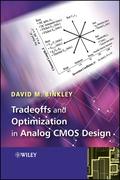
Tradeoffs and Optimization in Analog CMOS Design
Tradeoffs and Optimization in Analog CMOS Design: ab 99.99 €- Shop: ebook.de
- Price: 99.99 EUR excl. shipping
-
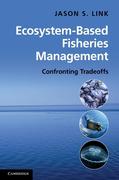
Ecosystem-Based Fisheries Management
Ecosystem-Based Fisheries Management - Confronting Tradeoffs: ab 61.49 €- Shop: ebook.de
- Price: 61.49 EUR excl. shipping
-
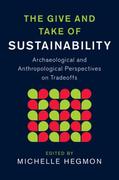
Give and Take of Sustainability
Give and Take of Sustainability - Archaeological and Anthropological Perspectives on Tradeoffs: ab 103.99 €- Shop: ebook.de
- Price: 103.99 EUR excl. shipping
-
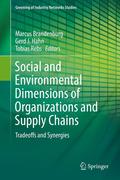
Social and Environmental Dimensions of Organizations and Supply Chains
Social and Environmental Dimensions of Organizations and Supply Chains - Tradeoffs and Synergies: ab 128.49 €- Shop: ebook.de
- Price: 128.49 EUR excl. shipping