90 Results for : allocating
-

The Ultimate Woman: 13 Ways to Handle Your Money Like a Bad Ass Chick , Hörbuch, Digital, ungekürzt, 59min
Saving ca$h Getting your money organized Wiping out debt Real-life budget Acquiring assets And so much more Oh, money. It makes the world go round, right? Despite what everyone says, money really can buy happiness at times. It may not be a fulfilling, long-term type of happiness, however, it can at least purchase short-term contentment and placate those obnoxious emotions. Unfortunately, if you do not handle your money well, you can see the dark side of the dollar bill, the frustration of not being prepared or having enough to get by, the struggle of living paycheck to paycheck, etc. As a society, the middle and upper classes in every country have a tendency to be spoiled; do not throw fruit at me, I am in there, too. Most of our issues are really and truly first-world problems. This says a lot about us as a society, but it also sheds some light on how we spend our money. However, it is also the silver lining of our cloud. If you have a tendency of having a lot of first-world problems, it means that you should be able to cut back on your spending with no problems. Personal finance is not just about cutting back, though. It is about properly allocating your money (also known as spending your money on the things on your financial priority list). In order to convey the importance of proper allocation, I have broken this book into 13 different sections. Chapter one is all about the first step of saving money: getting mentally prepared. Saving money is not just a physical thing; there is a mental aspect to it as well. If you are not mentally prepared, your budget will not last long. Be in the right state of mind, and put things into perspective. Chapter two is all about getting organized and filing away your financial records in a way that works best for you. Chapter three will delve a little deeper into your personal life. ungekürzt. Language: English. Narrator: Sorrel Brigman. Audio sample: https://samples.audible.de/bk/acx0/040042/bk_acx0_040042_sample.mp3. Digital audiobook in aax.- Shop: Audible
- Price: 9.95 EUR excl. shipping
-

The Half-life of Facts: Why Everything We Know Has an Expiration Date , Hörbuch, Digital, ungekürzt, 474min
New insights from the science of science.... Facts change all the time. Smoking has gone from doctor recommended to deadly. We used to think the Earth was the center of the universe and that Pluto was a planet. For decades, we were convinced that the brontosaurus was a real dinosaur. In short, what we know about the world is constantly changing. But it turns out there’s an order to the state of knowledge, an explanation for how we know what we know. Samuel Arbesman is an expert in the field of scientometrics - literally the science of science. Knowledge in most fields evolves systematically and predictably, and this evolution unfolds in a fascinating way that can have a powerful impact on our lives. Doctors with a rough idea of when their knowledge is likely to expire can be better equipped to keep up with the latest research. Companies and governments that understand how long new discoveries take to develop can improve decisions about allocating resources. And by tracing how and when language changes, each of us can better bridge generational gaps in slang and dialect. Just as we know that a chunk of uranium can break down in a measurable amount of time - a radioactive half-life - so too any given field’s change in knowledge can be measured concretely. We can know when facts in aggregate are obsolete, the rate at which new facts are created, and even how facts spread. Arbesman takes us through a wide variety of fields, including those that change quickly, over the course of a few years, or over the span of centuries. He shows that much of what we know consists of “mesofacts” - facts that change at a middle timescale, often over a single human lifetime. Throughout, he offers intriguing examples about the face of knowledge: what English majors can learn from a statistical analysis of The Canterbury Tales, why it’s so hard to measure a mountain, and why so many parents still tell kids to eat their spinach because it’s rich in ungekürzt. Language: English. Narrator: Sean Pratt. Audio sample: https://samples.audible.de/bk/gdan/000795/bk_gdan_000795_sample.mp3. Digital audiobook in aax.- Shop: Audible
- Price: 9.95 EUR excl. shipping
-

The Outsiders
An outstanding book about CEOs who excelled at capital allocation." Warren Buffett#1 on Warren Buffett's Recommended Reading List, Berkshire Hathaway Annual Shareholder Letter, 2012Named one of 19 Books Billionaire Charlie Munger Thinks You Should Read" in Business Insider.A book that details the extraordinary success of CEOs who took a radically different approach to corporate management." Charlie Munger, Vice-Chairman of Berkshire Hathaway CorporationThorndike explores the importance of thoughtful capital allocation through the stories of eight successful CEOs. A good read for any business leader but especially those willing to chart their own course." Michael Dell, chairman of the board of directors and chief executive officer of DellWhat makes a successful CEO? Most people call to mind a familiar definition: a seasoned manager with deep industry expertise." Others might point to the qualities of today's so-called celebrity CEOscharisma, virtuoso communication skills, and a confident management style. But what really matters when you run an organization? What is the hallmark of exceptional CEO performance? Quite simply, it is the returns for the shareholders of that company over the long term.In this refreshing, counterintuitive book, author Will Thorndike brings to bear the analytical wisdom of a successful career in investing, closely evaluating the performance of companies and their leaders. You will meet eight individualistic CEOs whose firms' average returns outperformed the S&P 500 by a factor of twentyin other words, an investment of $10,000 with each of these CEOs, on average, would have been worth over $1.5 million twenty-five years later. You may not know all their names, but you will recognize their companies: General Cinema, Ralston Purina, The Washington Post Company, Berkshire Hathaway, General Dynamics, Capital Cities Broadcasting, TCI, and Teledyne. In The Outsiders , you'll learn the traits and methodsstriking for their consistency and relentless rationalitythat helped these unique leaders achieve such exceptional performance.Humble, unassuming, and often frugal, these outsiders" shunned Wall Street and the press, and shied away from the hottest new management trends. Instead, they shared specific traits that put them and the companies they led on winning trajectories: a laser-sharp focus on per share value as opposed to earnings or sales growth; an exceptional talent for allocating capital and human resources; and the belief that cash flow, not reported earnings, determines a company's long-term value.Drawing on years of research and experience, Thorndike tells eye-opening stories, extracting lessons and revealing a compelling alternative model for anyone interested in leading a company or investing in oneand reaping extraordinary returns.- Shop: buecher
- Price: 24.99 EUR excl. shipping
-

SysML Distilled
SysML extends UML with powerful systems engineering capabilities for modeling a far wider spectrum of systems, and effectively capturing all aspects of a system’s design. Now, there’s a go-to reference for everyone who wants to start creating accurate and useful system models with SysML. Drawing on his pioneering experience creating models for Lockheed Martin and NASA, Lenny Delligatti illuminates SysML’s core components, and shows how to use them even under tight deadlines and other constraints. You needn’t know all of SysML to create effective models: SysML Distilled quickly teaches what you do need to know, and helps you deepen your knowledge incrementally as the need arises. Coverage includes: How SysML extends and improves UML, and how to immediately put it to practical use How to use SysML as a foundation for Model-Based System Engineering (MBSE) or Model-Based Engineering (MBE) What to know before you start an SysML modeling project How to use key SysML diagrams for block definitions, internal blocks, use cases, activities, sequences, state machines, parametrics, requirements, and packages How to use allocations to define cross-cutting relationships And much more – including appendices presenting complete SysML notation, identifying changes between SysML versions, and identifying authoritative sources for more information Product Description The Systems Modeling Language (SysML) extends UML with powerful systems engineering capabilities for modeling a wider spectrum of systems and capturing all aspects of a system’s design. SysML Distilled is the first clear, concise guide for everyone who wants to start creating effective SysML models.(Drawing on his pioneering experience at Lockheed Martin and NASA, Lenny Delligatti illuminates SysML’s core components and provides practical advice to help you create good models and good designs. Delligatti begins with an easy-to-understand overview of Model-Based Systems Engineering (MBSE) and an explanation of how SysML enables effective system specification, analysis, design, optimization, verification, and validation. Next, he shows how to use all nine types of SysML diagrams, even if you have no previous experience with modeling languages. A case study running through the text demonstrates the use of SysML in modeling a complex, real-world sociotechnical system.Modeled after Martin Fowler’s classic UML Distilled, Delligatti’s indispensable guide quickly teaches you what you need to know to get started and helps you deepen your knowledge incrementally as the need arises. Like SysML itself, the book is method independent and is designed to support whatever processes, procedures, and tools you already use.Coverage IncludesWhy SysML was created and the business case for using it Quickly putting SysML to practical use What to know before you start a SysML modeling project Essential concepts that apply to all SysML diagrams SysML diagram elements and relationships Diagramming block definitions, internal structures, use cases, activities, interactions, state machines, constraints, requirements, and packages Using allocations to define mappings among elements across a model SysML notation tables, version changes, and sources for more information Features + Benefits The most practical introduction to SysML Covers all essential diagrams: block definitions, internal blocks, use cases, activities, sequences, state machines, parametrics, requirements, and packages How to use SysML to move towards full-fledged Model-Based Systems Engineering (MBSE) Foreword by Rick Steiner xvii Foreword by Richard Soley xix Preface xxv Acknowledgments xxxi About the Author xxxiii Chapter 1: Overview of Model-Based Systems Engineering 1 1.1 What Is MBSE? 2 1.2 The Three Pillars of MBSE 4 1.3 The Myth of MBSE 9 Chapter 2: Overview of the Systems Modeling Language 11 2.1 What SysML Is–and Isn’t 11 2.2 Yes, SysML Is Based on UML–but You Can Start with SysML 13 2.3 SysML Diagram Overview 14 2.4 General Diagram Concepts 17 Chapter 3: Block Definition Diagrams 23 3.1 Purpose 23 3.2 When Should You Create a BDD? 24 3.3 The BDD Frame 24 3.4 Blocks 26 3.5 Associations: Another Notation for a Property 44 3.6 Generalizations 49 3.7 Dependencies 52 3.8 Actors 53 3.9 Value Types 55 3.10 Constraint Blocks 57 3.11 Comments 59 Chapter 4: Internal Block Diagrams 63 4.1 Purpose 63 4.2 When Should You Create an IBD? 64 4.3 Blocks, Revisited 64 4.4 The IBD Frame 65 4.5 BDDs and IBDs: Complementary Views of a Block 66 4.6 Part Properties 67 4.7 Reference Properties 67 4.8 Connectors 68 4.9 Item Flows 71 4.10 Nested Parts and References 72 Chapter 5: Use Case Diagrams 77 5.1 Purpose 77 5.2 When Should You Create a Use Case Diagram? 77 5.3 Wait! What’s a Use Case? 78 5.4 The Use Case Diagram Frame 81 5.5 Use Cases 82 5.6 System Boundary 83 5.7 Actors 83 5.8 Associating Actors with Use Cases 84 5.9 Base Use Cases 85 5.10 Included Use Cases 85 5.11 Extending Use Cases 87 Chapter 6: Activity Diagrams 89 6.1 Purpose 89 6.2 When Should You Create an Activity Diagram? 90 6.3 The Activity Diagram Frame 90 6.4 A Word about Token Flow 92 6.5 Actions: The Basics 93 6.6 Object Nodes 95 6.7 Edges 99 6.8 Actions, Revisited 102 6.9 Control Nodes 112 6.10 Activity Partitions: Allocating Behaviors to Structures 119 Chapter 7: Sequence Diagrams 123 7.1 Purpose 123 7.2 When Should You Create a Sequence Diagram? 124 7.3 The Sequence Diagram Frame 125 7.4 Lifelines 125 7.5 Messages 129 7.6 Destruction Occurrences 138 7.7 Execution Specifications 139 7.8 Constraints 141 7.9 Combined Fragments 144 7.10 Interaction Uses 151 Chapter 8: State Machine Diagrams 155 8.1 Purpose 155 8.2 When Should You Create a State Machine Diagram? 156 8.3 The State Machine Diagram Frame 156 8.4 States 158 8.5 Transitions 162 8.6 Pseudostates 171 8.7 Regions 173 Chapter 9: Parametric Diagrams 177 9.1 Purpose 177 9.2 When Should You Create a Parametric Diagram? 178 9.3 Blocks, Revisited 179 9.4 The Parametric Diagram Frame 182 9.5 Constraint Properties 184 9.6 Constraint Parameters 185 9.7 Value Properties 185 9.8 Binding Connectors 187 Chapter 10: Package Diagrams 189 10.1 Purpose 189 10.2 When Should You Create a Package Diagram? 190 10.3 The Package Diagram Frame 190 10.4 Notations for Namespace Containment 191 10.5 Dependencies between Packages 193 10.6 Importing Packages 193 10.7 Specialized Packages 194 10.8 Shades of Gray: Are You Looking at a Package Diagram or a Block Definition Diagram? 198 Chapter 11: Requirements Diagrams 201 11.1 Purpose 201 11.2 When Should You Create a Requirements Diagram? 202 11.3 The Requirements Diagram Frame 202 11.4 Requirements 204 11.5 Requirements Relationships 205 11.6 Notations for Requirements Relationships 209 11.7 Rationale 213 Chapter 12: Allocations: Cross-Cutting Relationships 215 12.1 Purpose 215 12.2 There’s No Such Thing as an Allocation Diagram 216 12.3 Uses for Allocation Relationships 216 12.4 Notations for Allocation Relationships 219 12.5 Rationale 224 Appendix A: SysML Notation Desk Reference 227 Appendix B: Changes between SysML Versions 245 Bibliography 253 Index 255SysML Distilled is a go-to reference for everyone who wants to start creating accurate and useful system models with SysML. Drawing on his pioneering experience creating models for Lockheed Martin and NASA, Lenny Delligatti illuminates SysML's core components, and shows how to use them even under tight deadlines and other constraints. The reader needn't know all of SysML to create effective models: SysML Distilled quickly teaches what does need to be known, and helps deepen the reader's knowledge incrementally as the need arises.- Shop: buecher
- Price: 25.99 EUR excl. shipping
-

Allocating Health Care Resources
Allocating Health Care Resources - Softcover reprint of the original 1st ed. 1995: ab 89.99 €- Shop: ebook.de
- Price: 89.99 EUR excl. shipping
-

Sequentielle verborgene Handlungen bei Vermögensbeschränkung
Sequentielle verborgene Handlungen bei Vermögensbeschränkung - Allocating control in agency problems with limited liability and sequential hidden actions: ab 14.99 €- Shop: ebook.de
- Price: 14.99 EUR excl. shipping
-

Allocating Customer's Wallet. Das Konzept und die Methoden zur Messbarkeit von Customer Wallet Size
Allocating Customer's Wallet. Das Konzept und die Methoden zur Messbarkeit von Customer Wallet Size: ab 14.99 €- Shop: ebook.de
- Price: 14.99 EUR excl. shipping
-
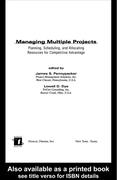
Managing Multiple Projects
Managing Multiple Projects - Planning Scheduling and Allocating Resources for Competitive Advantage: ab 60.49 €- Shop: ebook.de
- Price: 60.49 EUR excl. shipping
-

Allocating Authority
Allocating Authority - Who Should Do What in European and International Law?: ab 40.49 €- Shop: ebook.de
- Price: 40.49 EUR excl. shipping
-

Equity Choices and Long-Term Care Policies in Europe
Equity Choices and Long-Term Care Policies in Europe - Allocating Resources and Burdens in Austria Italy the Netherlands and the United Kingdom: ab 30.99 €- Shop: ebook.de
- Price: 30.99 EUR excl. shipping